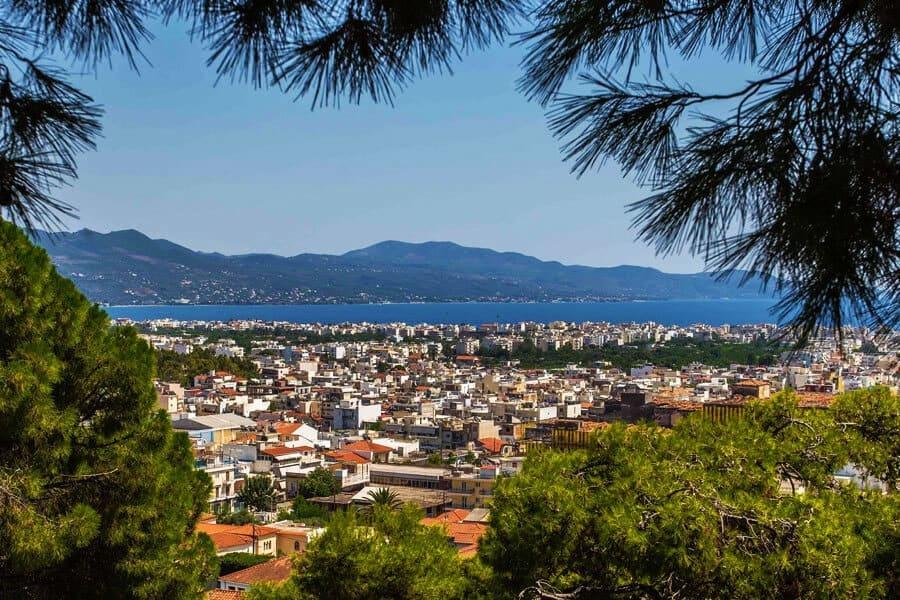
Kalamata, the capital and central port of Messinia, is situated at the site of ancient Farai. Following independence from the Turks and thanks to the exploitation of the fertile Messinian lands (producing olive oil, olives, raisins, figs, wine, etc), it developed into a wealthy urban centre and a significant port. It is located 238 km SW of Athens.
The point of reference par excellence in the city of Kalamata is the legendary “castle of Isabeau” where the renowned International Dance Festival and many other performances takes place annually during the Summer time. It is amphitheatrically constructed on the site of the Farai acropolis offering a bird’s eye view of the city. Constructed in the 13th century by William Villehardouin, it underwent subsequent additions and conversions by the Venetians and the Turks. Nowadays, it is an ideal open air venue for theatre, music and dance shows.
No less beautiful is the exquisite Palia Poli (Old City) at the foot of the Castle. The wider region boasts the Metropolitan Panagia Ipapanti church (1873), the patron saint of Kalamata celebrated on February 2nd, the 12th century Kalograion Monastery with the renowned silk weaving workshop, and the Byzantine church Agioi Apostoloi (13th century) with the brick enclosed masonry.
The area is the hotspot for the city’s youth, for it is the beating heart of the nightlife in Kalamata and by no means will it be still!
The seaside road in front of the city’s extensive beach (4 km length with marvellous waters). On the seaside of Kalamata, people can swim in crystal clear waters and enjoy lace-like beaches, which have been granted the Blue Flag award of quality. Along the seaside, there are several tavernas, ouzo restaurants, cafeterias, bars, clubs, whereas beach aficionados can enjoy all kinds of water sports.
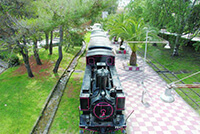
The Municipal Railway Park of Kalamata is an open-air museum, unique of its kind in Greece. The park encompasses the old railway station Kalamata-Port and the adjacent area that it was used for the deposition of bunkers back at the time of the steam trains.
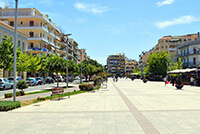
Aristomenous is the city’s main street with a large square ("Vasileos Georgiou"). Here is the heart of the city, home to numerous shops and cafes, it's worth a stroll just to enjoy the ambiance.
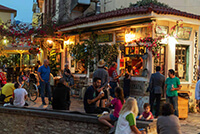
The best starting point for sight-seeing around Kalamata is the city’s historical centre. Wandering in the alleys of the historical centre will revive images from the past and reveal buildings that have resisted time.
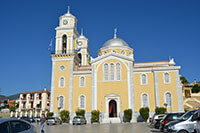
In the historic centre of the city there is the Metropolitan Temple of Christ's Ypapanti, which is also the patron of Kalamata. The Byzantine Metropolitan and Cathedral Temple exist since 1873. In the temple, there is the miracle working icon of Panagia Ypapanti, the protectress of the people of Kalamata and of all the Messenians. Every year, on the 1st and 2nd of February there is a celebration and a litany of the icon in the centre of the town.
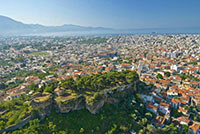
A castle with a rich history on a pine-covered rocky hill at the NW side of the city of Kalamata. An ancient acropolis existed on the hill before the Trojan war, and later a Byzantine fortress, but the ruins we observe today are the remains of the castle that was (re)built there in 1208 by Gulielme Villearduin , during the Frankish occupation. It has inspired Angelos Terzakis’s novel about Princess Izampo who had lived in the area. At the foot of the castle there is the semi-cavernous temple of Saint John that has probably existed since the post-Byzantine years. It is said that the citadel of ancient Pharai was situated below the castle. In the nunnery of Saints Constantine and Helen', built beside the castle in the 18th century, you will also learn about the ongoing Byzantine tradition of weaving pure silk on “lakkoi” (looms).
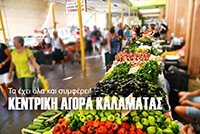
It is Kalamata's Central Food Market, where you may find local and fresh food. The open food market takes place every Saturday and Wednesday by the morning, however the other days of the week, the closed food market takes place.
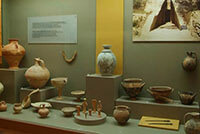
The museum building is located at the heart of the historic center of Kalamata, where the Municipal Market of the city used to be, a place that was bustling with merchants and shoppers every day.
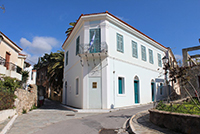
The Folklore Museum of Kalamata was founded by local “Society for the Dissemination of Letters,” the purpose of collecting archival material and objects of the Revolution of 1821, and the preservation and promotion of objects of modern culture in the region. On the ground floor of the Mansion Kyriakou, you can see small theme sections concerning rural and pastoral life, agricultural artisanship, the art of weaving, pottery and urban occupations. Another series of exhibits is about the daily life of residents.

The Municipal Art Gallery of Kalamata is located since 2002 in a renovated neoclassical building in the historic center of Kalamata. In 2007, it was named from A.Tassou engraver. Of particular interest are the periodical exhibitions that organized by the gallery and covering all forms of artistic expression, both classical and pioneering.
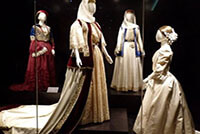
The Museum of Traditional Greek Costumes is a cultural gem, narrating the history of local folk dress from the mid-18th to early-20th century, combining modern stage design and an exemplary use of sound and light.
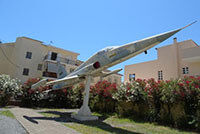
In the Military Museum of Kalamata in the capital of Messinia under the supervision of the Joint Chiefs of Staff there is the newest Greek history since 1821 to the present day through texts, photographic and audiovisual material of the army.

The Kalamata International Dance Festival takes place usually during July, hosting exceptional international and Greek contemporary-dance performances, spurring dialogue on performance arts, providing specialized training and of course offering the chance to enjoy dance. The newly built Kalamata Dance Megaron is the heart of the festival, where most of the shows take place.
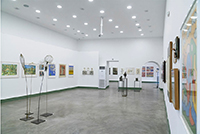
The Art Space Α49, opened in Novenber of 2018 and host a variety of important exhibitions. There is also a shop here with gift items and souvenirs from the Benaki Museum.
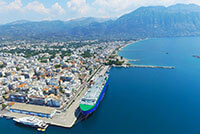
The port of Kalamata is the place where residents gather to enjoy coffee, drink and walks through the paved road. During the summer months it carries out the coastline Kalamata - Kythira - Kissamos. In recent years it has been attracting several cruise ships with the interest of the visitors to grow rapidly. In the central position of the port is Customs Square, which occupies with the homonymous administrative and the port office in a magnificent building with neoclassical elements. Just to the west of the square is the huge building of the Autonomous Raisin Organization and to the west the abandoned industrial building of Roller Mills "Evangelistria".
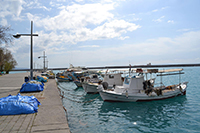
The pier at Kalamata harbor is the favorite place of locals for walking. There you will meet people of all ages, especially the peaceful afternoons of the days with good weather. In the morning you will have the chance to see the fishermen who have just returned from the fishing of the day and they will cut off their nets to prepare for the next. Along the stroll you will find benches to rest & enjoy the beauty of the landscape, while at the end you will find the lighthouse of the city.
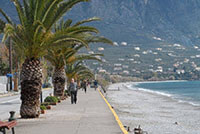
In the summer, the coast of Kalamata bustles with life, both during the day when the long coastline fills with bathers and in the night, when young people fill the clubs.
Navarinou street, to the east of the port, is the “coast” for the locals and the citizens’ resort; at any time of the day and night you will see groups of people strolling and talking by the sea.
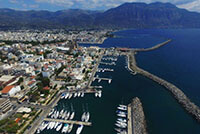
The marina to the west of the port has numerous sailing ships anchored. The Marina area is home to loads of traditional (and not so traditional) restaurants and taverns.

The Peloponnese (Πελοπόννησος) is the stuff of legends. Literally. It is here that Hercules fought the Nemean lion and gods walked the earth, meddling in mortal affairs; it's from here that Paris of Troy eloped with Helen and the Argonauts set sail in search of the Golden Fleece. Celestial and mythological charms aside, this region bears tangible traces of the many civilisations that once called it home, witnessed in its classical temples, Mycenaean palaces, Byzantine cities, and Ottoman, Frankish and Venetian fortresses.
The very topography that kept invaders at bay for centuries – lofty, snowcapped mountains, vast gorges, sandy beaches and azure waters – now draws visitors of a very different kind. Filoxenia (hospitality) is as strong here as anywhere in the country; the food is among Greece's best; and the region's vineyards are contributing to Greece's wine renaissance. Locals claim to have the best of everything to give. And that’s no myth.
Our suggestions for excursions in Peloponnese, outside Messinia Region (noted the distance from Kalamata):
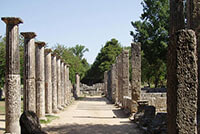
In the western Peloponnese, in the "Valley of Gods", lies the most celebrated sanctuary of ancient Greece, and the birthplace of the most important athletic mega-event of all times; the Olympic Games. Olympia is one of the most well known tourist destinations in Greece, and one of the most powerful brand names worldwide. Olympia is easily accessible from other areas of interest of Greece. It is only 1,5 hour from Kalamata.
* This excursion can be full day as it can be combined with your return from Pylos and Gialova.
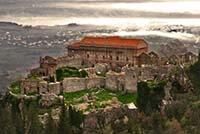
Mystras, the 'wonder of the Morea', was built as an amphitheatre around the fortress erected in 1249 by the prince of Achaia, William of Villehardouin. Reconquered by the Byzantines, then occupied by the Turks and the Venetians, the city was abandoned in 1832, leaving only the breathtaking medieval ruins, standing in a beautiful landscape.
* This excursion can be full day as it can be combined with your visit to the capital of Lakonia, the imposing Sparta.
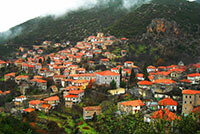
The villages of mountainous Arcadia are beautiful all year round, and it’s up to you to discover their magic. Green landscapes, incredible atmosphere, and delicious food in traditional villages, like Elliniko, Stemnitsa, Dimitsana and Vytina all lie within a relatively short distance from Kalamata.
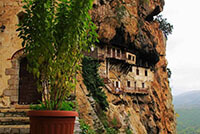
The entire area is rich with cultural and historical monuments and landmarks, and those of you who are culture-oriented will be thrilled to discover them! Visit Ancient Gortyna, right next to Lousios riverside (at a 4km distance from Atsicholo village) where there are hot springs and the sanctuary of god Asclepius; Ancient Lykosoura is the “oldest city in the world” according to Pausanias and the Sanctuary of Lykaios Zeus is located on the crest of Mt Lykaio (18km from Lykosoura).
If you prefer some action, then go skiing at the Mainalo ski centre, practice your favourite extreme sport in Lousios River or pick a hiking route and explore the countryside
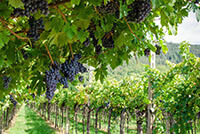
The first reference to the wine tradition of the Peloponnese came from Homer who called it Ampeloessa, meaning "full of vines." Neither wars nor phylloxera were able to stop the production of wine here in one of the most historic wine regions of Greece. Spread throughout hillsides, plains and plateaus, the vineyards of the Peloponnese are known for their diversity and complexity. At Mantineia in Arcadia it is produced the indigenous variety of Moschofilero (white) and at Nemea the local variety of Agiorgitiko (red). Famous wineries in Arcadia are Spiropoulos and Tselepos. In Nemea area, the best wineries are Skouras, Gaia, Lafazanis and Repanis.
- Please ask our reception for reservations
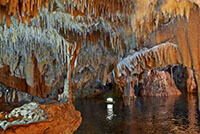
The cave of Diros, is found 70 km south of kalamata. Actually there are three caves, the Alepotrypa, Katafigi and Glyfada. This is a unique experience traveling barely a subterranean river length 1,600 m. The magic of the color, and the beautiful shapes, formed by the stalactites and stalagmites makes a unique spectacle. After the ongoing research at the cave of Diros to date, the total length reaches 6.500 meters and is still unknown the final length.
* This excursion can be done full day as it can be combined with your visit to the charming villages of Mani.
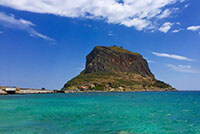
Monemvasia, located at the east coast of the Peloponnese, is one of the best travelling destinations in Greece and definitely not only for the summer. Apart from the well-known Kastropolitia, with its unique color and special mediaeval atmosphere, the visitor cherishes the beauty of the whole region of the Municipality which is considered to be an excellent tourist destination throughout the year.
We recommend overnight stay in the majestic castle town.
Enjoy Peloponnese!
The natural beauty of Messinia with the indented shores, sandy beaches, forested mountains and fertile valleys, coexists with significant archaeological monuments.
Messinia is one of the most beautiful prefectures in Greece. Its landscape consists of endless coast line and large mountains, and it´s for certain that there are many surprises for you, as long as you have the mood and the time to explore it. A practicable method to approach Messinia from a traveler’s point of view is by taking into consideration the central road axes. This way, Messinia can be divided in:
Our suggestions for the main Points of Interest, ideal for excursions around Messinia are:
The area of the southern Peloponnese known as ‘the Mani’ is a special place. Its location on the fringes of southern Europe, its turbulent history and its rugged, natural beauty all combine to give the visitor an unforgettable experience.
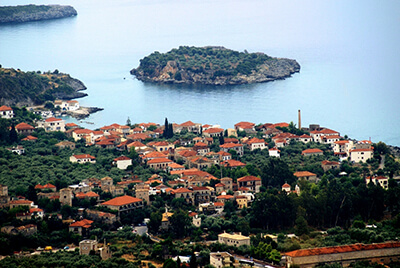
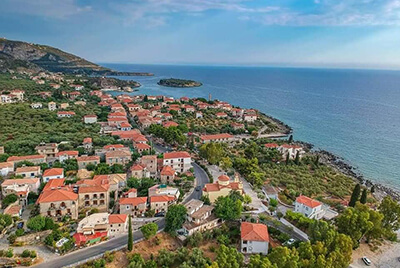
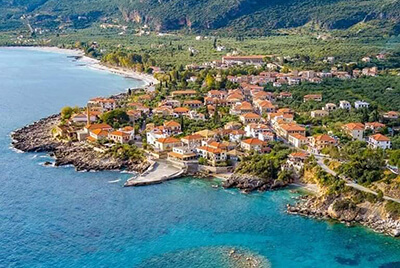
Kardamyli (36km) is charming, with handsome houses and several tavernas. It has always had a reputation as being on the bohemian side, giving it a different atmosphere to Stoupa and Agios Nikolaos. Shops, cafes and tavernas flank the high street and there are other places to eat and drink off the main street towards the sea. At the southern end of the town is a rough road that takes you down into the harbour. It is extremely picturesque and the harbour jetty has what used to be a fortified customs house and a small church built on it. The chimney that dominates the skyline was once a factory producing olive soap. No visit to Kardamyli is complete without a visit to the Troupakis fortified complex and museum located in the old town, just a few minutes walk from the high street.
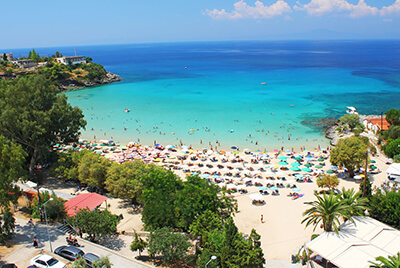
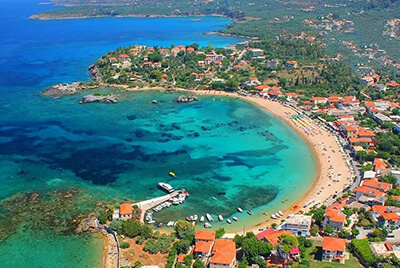
Stoupa (44km) is about an hours drive form Kalamata, passing through Kambos and Kardamyli en route. The approach is dominated by its acropolis at the southern end of the village. It was known in ancient times as Leuktra, a Free Lakonian City which declared independence from Sparta. This name survives as Lefktron, the village immediately inland from Stoupa on the other side of the main road. Over the last two decades it has emerged as the Mani’s number one resort and yet has not been ruined by over-development. It is very child friendly and has a range of types of accommodation to stay in, ranging from two campsites to studios, hotels and up-market villas.
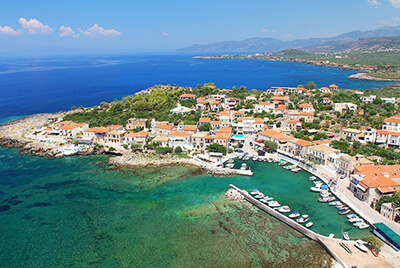
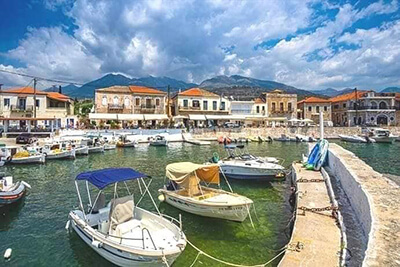
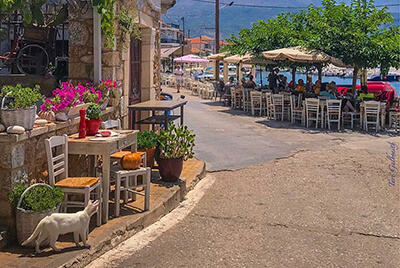
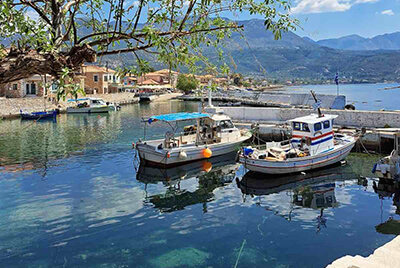
Agios Nikolaos (49 km) is a picturesque fishing village that has become a popular destination in recent years since it is only 5 km from Stoupa. You can swim in the crystal clear waters of the beautiful sandy beaches with imposing rocks. On its paved paths there are taverns with special tastes of traditional Messinian cuisine and some bars by the sea.
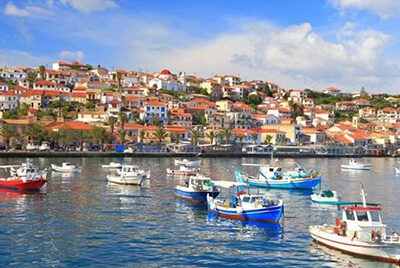
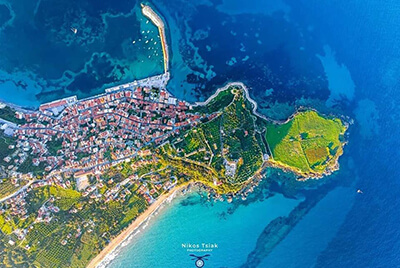
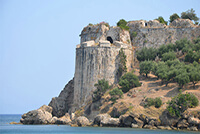
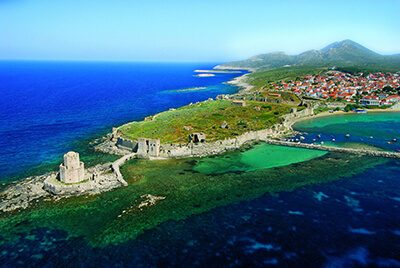
Colorful Koroni is located 53 km southwest of Kalamata, in the first part of the peninsula of the Peloponnese, a region with an island atmosphere, a remarkable natural environment and wealth of attractions. Thanks to its strategic position, it has been important trade and marine center. But for the very same reason, it has always been coveted by the powerful of the times. That explains the need for building huge fortresses.
The castle of Koroni:
One of the finest examples of the Venetian fortress architecture and amongst the few of each kind to encompass houses and churches, the castle of Koroni dominates Akritas cape, on the southern edge of the Messinian Gulf. It was built by the Venetians in the 13th century and revamped by the Ottomans in the 16th.
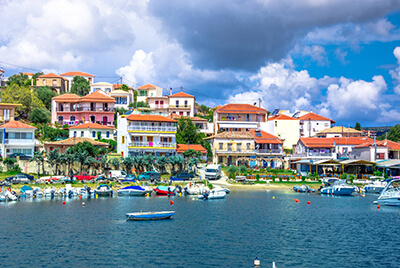
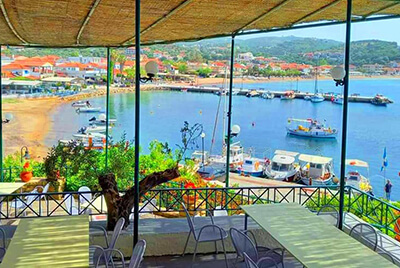
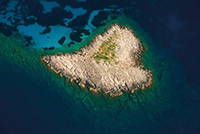
Foinikounda (60km), is a coastal village of Messinia. Located in the middle of the path between Methoni and Koroni, opposite Schiza and has grown into one of the most important tourist resorts, mainly by exploiting the fact that it is surrounded by large sandy beaches. The looks of visitors mainly attract the stunning sandy beaches with crystal clear waters. Also, the picturesque landscape and excellent fish taverns have made Foinikounda popular summer destination!
Just across the gulf of Finikounda lies the complex of Oinousses which consist the island of Sapientza, wellknown for its distinct shape of heart and numerous shipwrecks, the rocky island of Agia Mariani and the island of Schiza, the largest and easternmost, with a remarkable cave. The islands are integrated into the Natura 2000 network, along with the Cape Acritas.
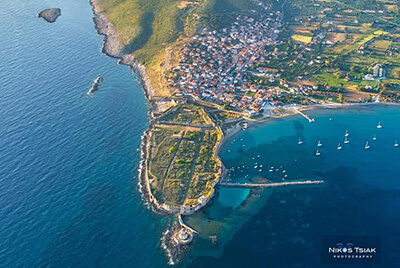
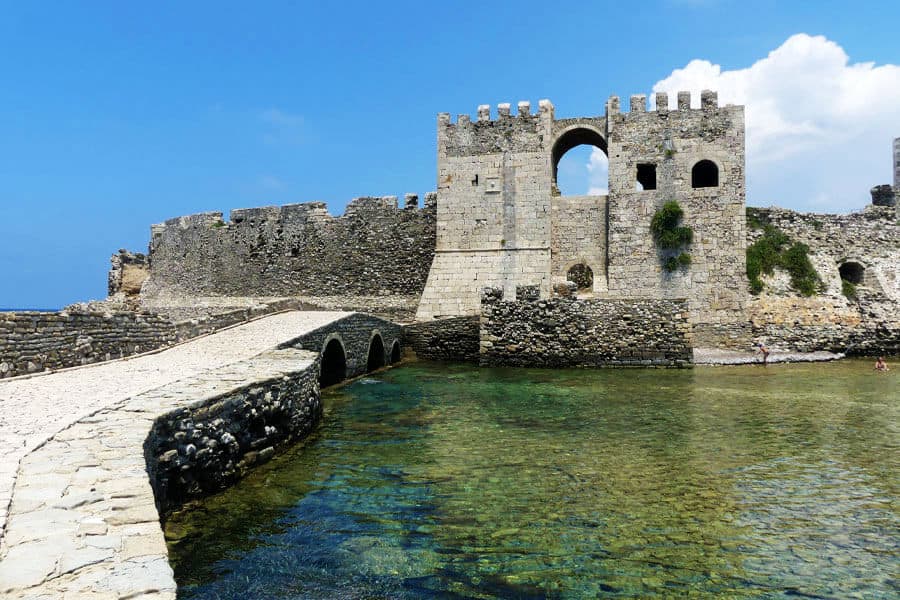
Picturesque Methoni (65 km) overlooking the Ionian Sea has also a great historical significance because of its strategic location, since it had became a pole of attraction for the powerful armies of the era.In Methoni you will see mansions that retain the characteristics of local architecture, ancient monuments, as well as Byzantine, Venetian and Turkish: churches, mosques, huge fortresses.
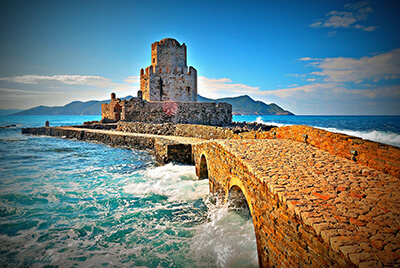
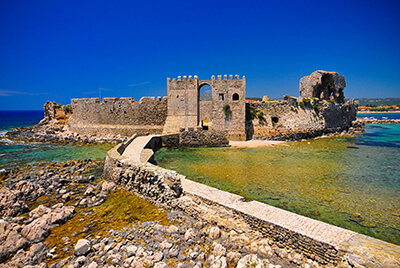
The castle of Methoni:
Built by the Venetians in the early 13th century on a rocky promontory, the castle is among the largest ones in the Mediterranean. You’ll be astonished at the bridge stone of 14 arches which connects the castle to the shore instead of the timber one that used to stand in its place before the Venetians ever got there. The celebrated symbol of Venice, the lion of St Marc, dominates the gate of the castle where immured reliefs, emblems, blazons, inscriptions, the huge gates –especially the main gate, above the moat – and the relics of two Ottoman bathhouses have survived.
* This excursion can be combined with Pylos and Gialova, which are only 10km away from Methoni.
Someone can only characterize the region of Pylia (around Pylos city) as a “eutopia” (εὖ- τόπος > good place)! The land, its distinctive natural beauty and the very long history compose an island scenery with many scattered sights.
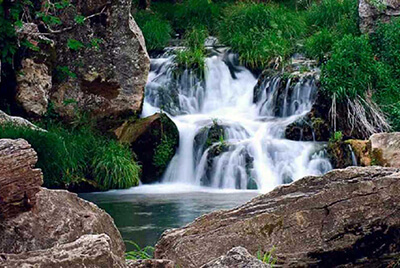
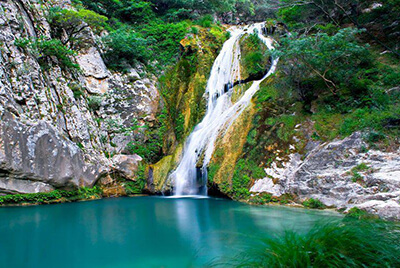
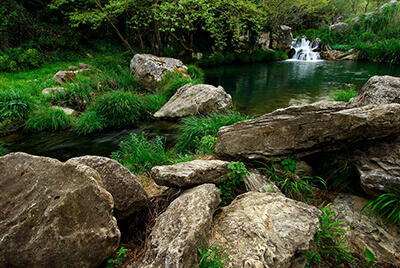
Polylimnio (33 km) is a small green paradise, near the village Kazarma in the direction of the village of Haravgi, full of scattered small lakes that create waterfalls. Combined with the vegetation, purity and sound of the waters, travels you to a unique fairy tale that will excite the most daring to dive and the others to explore the place. Watch the video from the area here
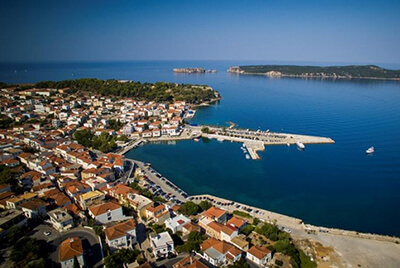
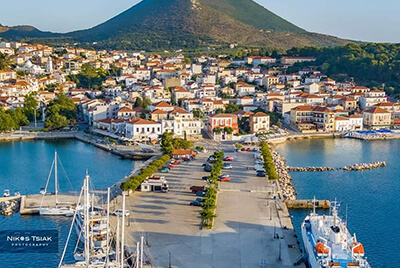
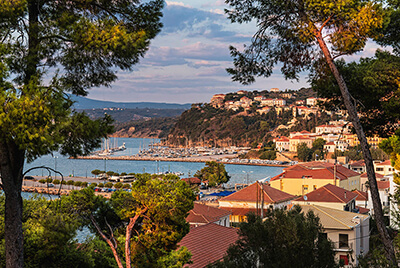
Pylos (52km) is a large historical village on the west coast of Messinia, which has emerged as the most popular destination in the region. Scattered in the area you will find several castles, palaces, squares, museums and monuments of the Navarino Naval War that keep alive the past of Pylos. The island atmosphere, the traditional architectural elements and the modern marina give a unique color to Pylos, which receives numerous visitors throughout the year.
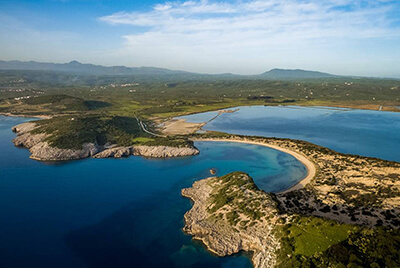
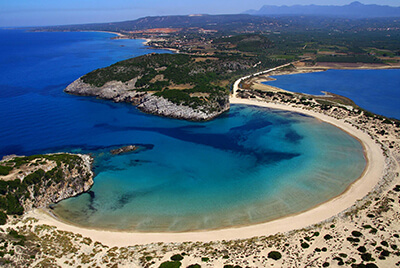
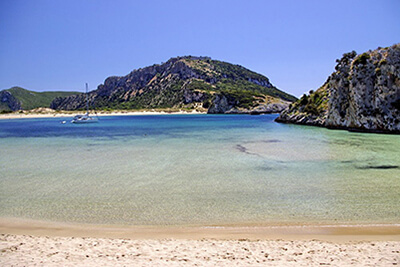
Voidokilia Beach, a few kilometers north of Pylos, with its special shape, is possibly the most renowned beach in Messenia and one of the most exquisite beaches in whole Greece!
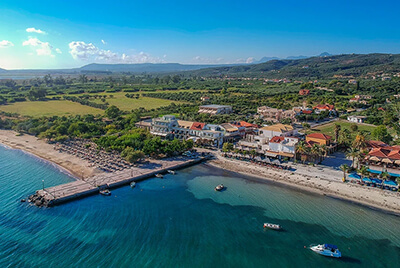
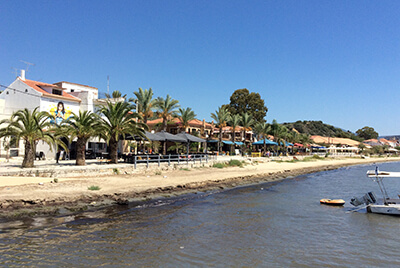
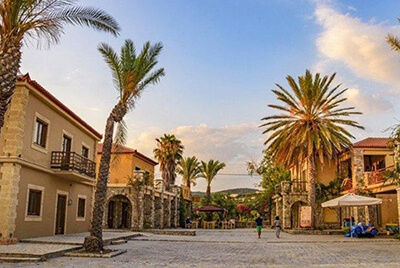
Gialova (54 km), in a short distance from Pylos, is a picturesque seaside settlement, which is built on the bay of Navarino with plenty of cafés and restaurants. The well-known Gialova lagoon is a very important wetland with rich flora and fauna where many species of migratory birds find shelter.
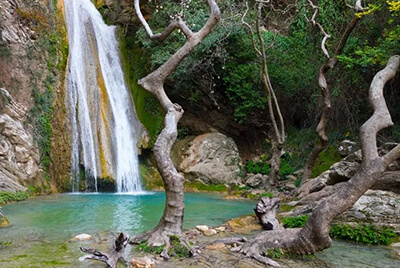
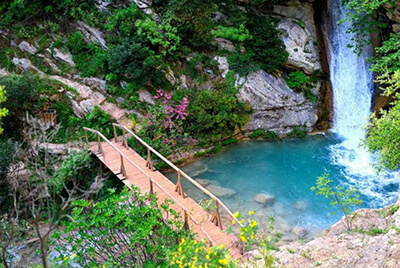
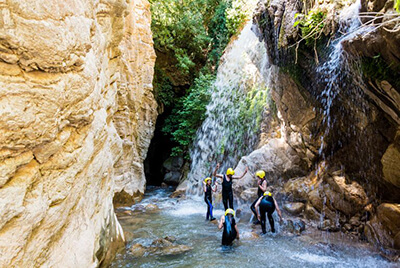
The only Greek river “of feminine gender”. According to the Greek Mythology, Neda was a Nymph, a goddess of waters. It is one of the last natural paradises the unique natural beauty of the gorge with waterfalls, natural tunnels, and the vegetation of the area along with the opulent cultural and monumental profile of Ancient Phigaleia.
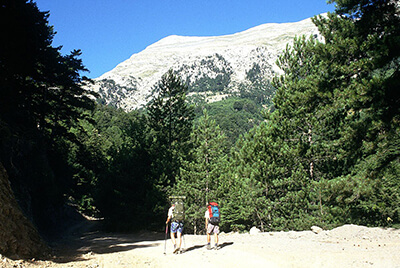
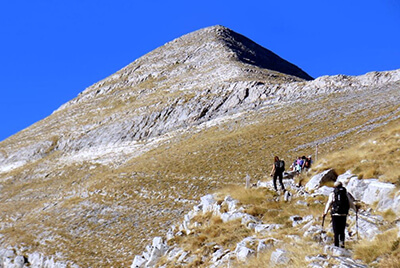
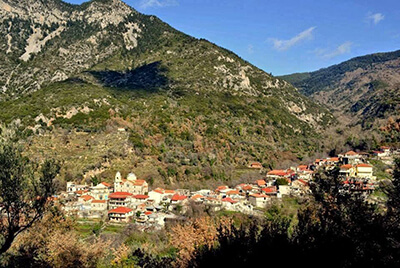
Crossing Kalamata towards the North and heading to Sparti, you will enter the magnificent world of Taygetos, the roof of Kalamata. Taygetos is the biggest challenge for lovers of mountain, trekking and climbing. Imposing and full of contradictions, with slopes, canyons, caves, sources, rivers and rich vegetation alternating with steep rocks, it draws on the intrepid who dare to explore it.
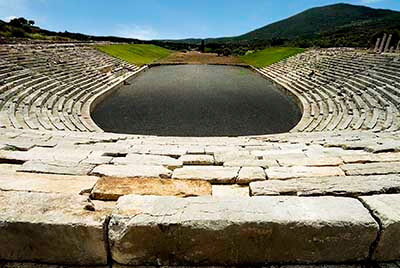
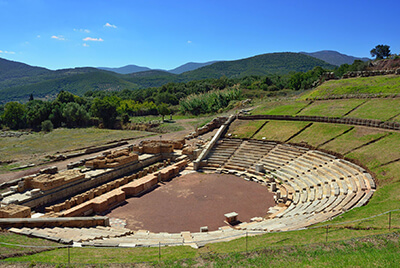
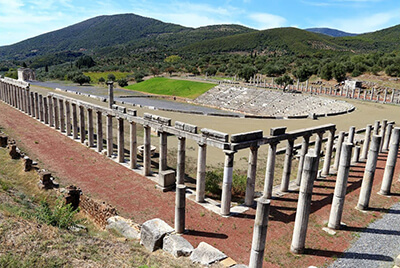
Messini (or Messene) is a significant ancient city in terms of its size, form, and state of preservation, and still has much to offer. It possesses not only sanctuaries and public buildings, but also imposing fortifications, and houses and tombs. It enjoys, amongst other things, the advantage of never having been destroyed or covered by later settlements, and is located on an unspoiled inland site. Its natural setting combines the grandeur of the mountains of Delphi with the low-lying, riverine tranquillity of Olympia, the dominating bare limestone mass of Ithome, the site of the ancient acropolis, with the low fertile valley around the ancient city.